







E Majta
project by:
Friedrich-Ebert-Stiftung
produced by:
Henrik Lezi
2022
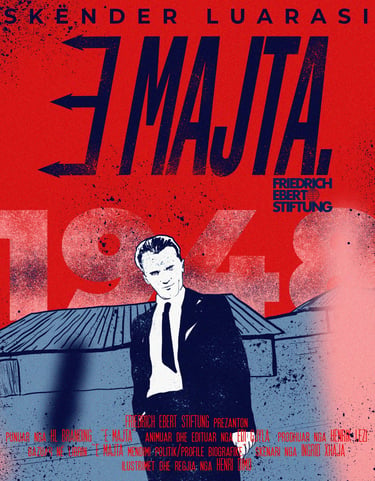
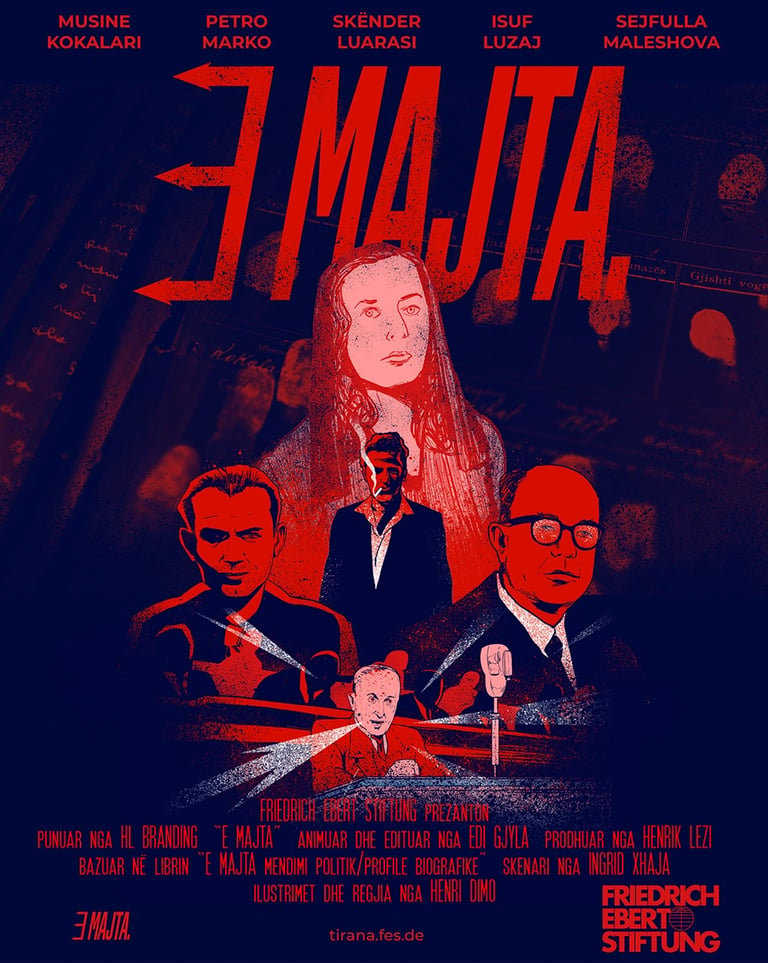
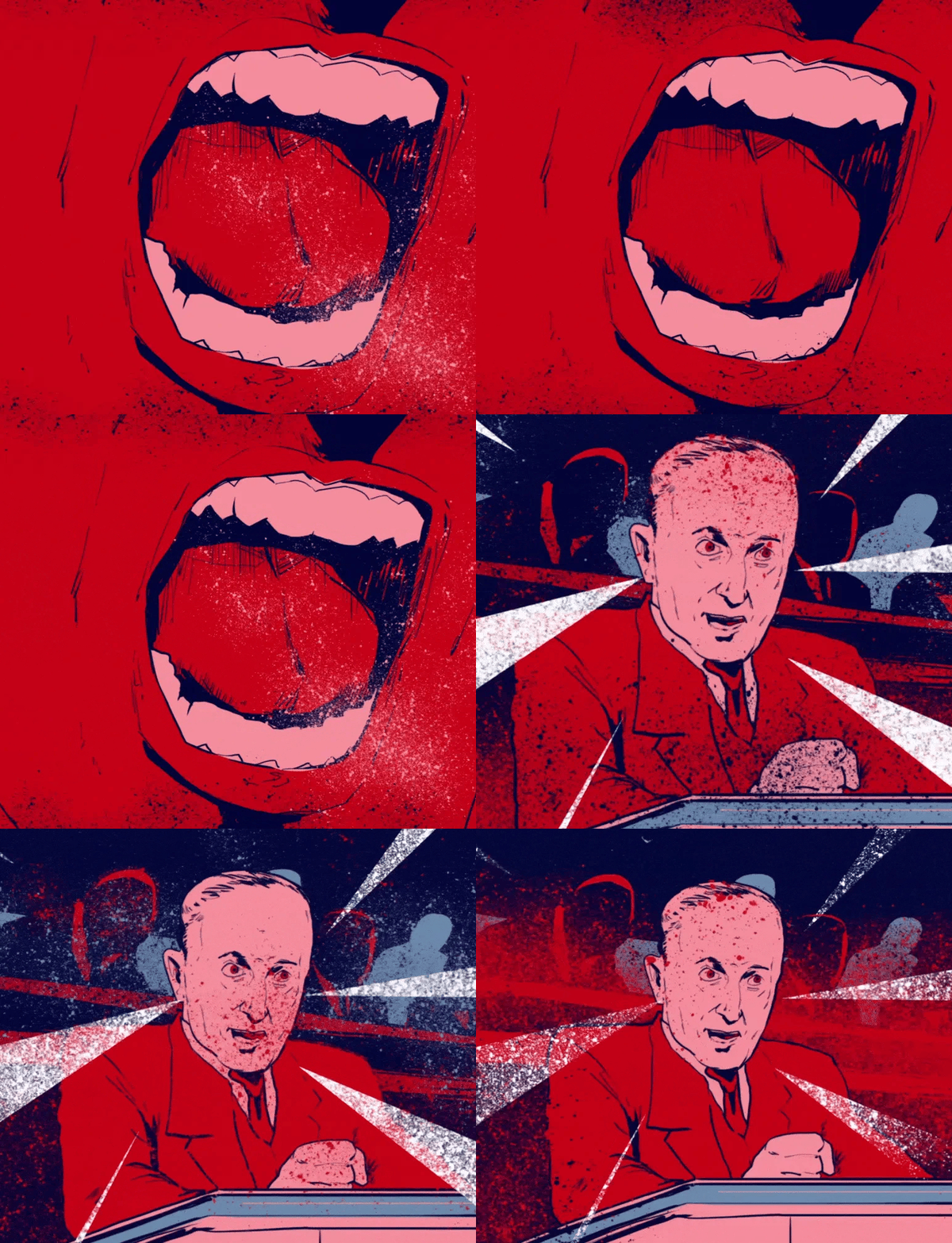
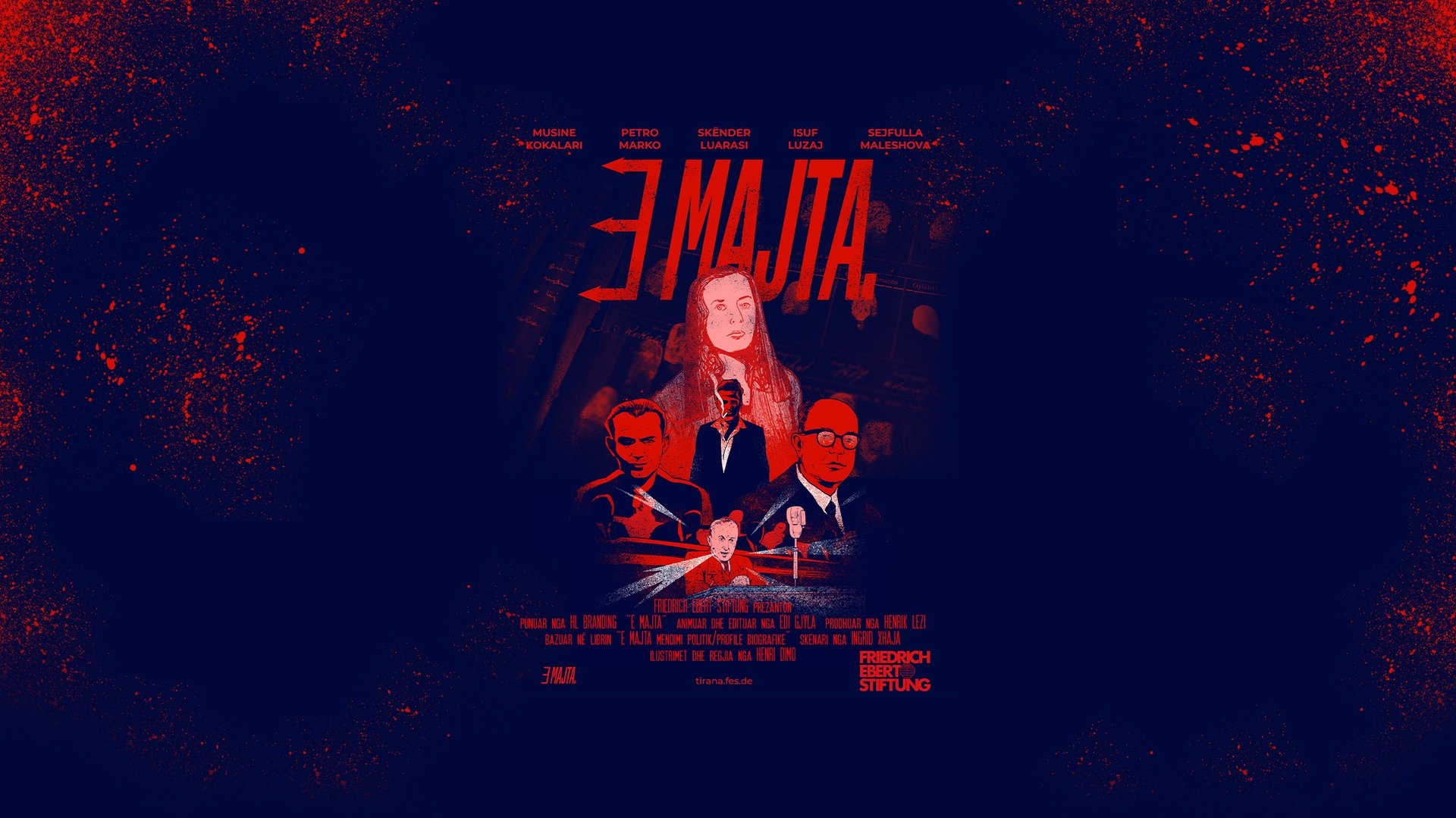
The “E Majta” animations are a series of short visual to promote the book E Majta, published by Friedrich-Ebert-Stiftung and designed by Henrik Lezi.
These videos reinterpret the lives and legacies of key Albanian intellectuals and cultural figures—such as Skënder Luarasi, Petro Marko, Sejfulla Malëshova, Musine Kokalari, and Isuf Luzaj through striking digital motion design.
By blending historical depth with a contemporary visual language, the animations aim to make the book’s themes more engaging and accessible to a wider audience. Each piece is designed to not only inform, but also to inspire reflection on the values and voices that shaped Albania’s modern history.





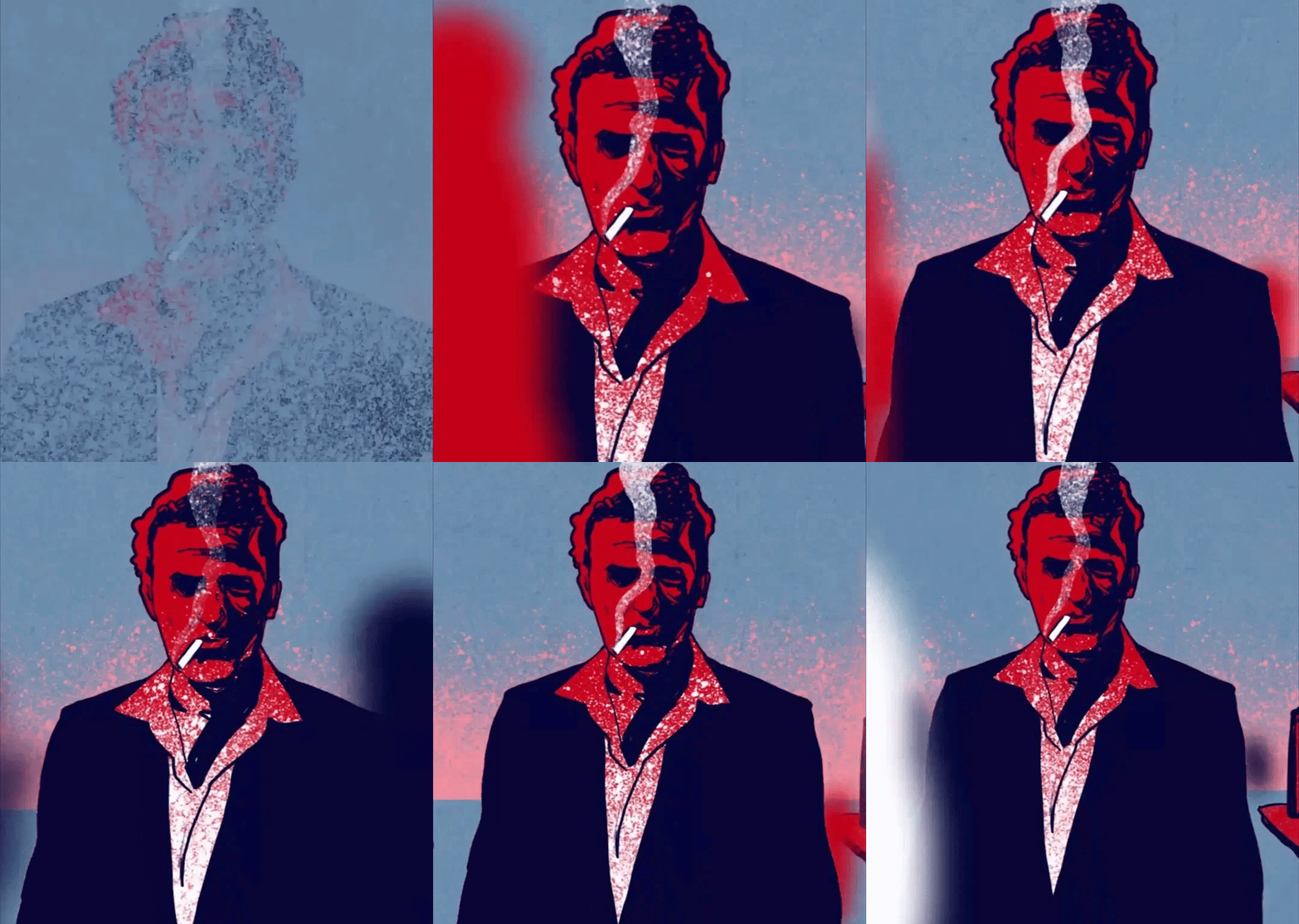
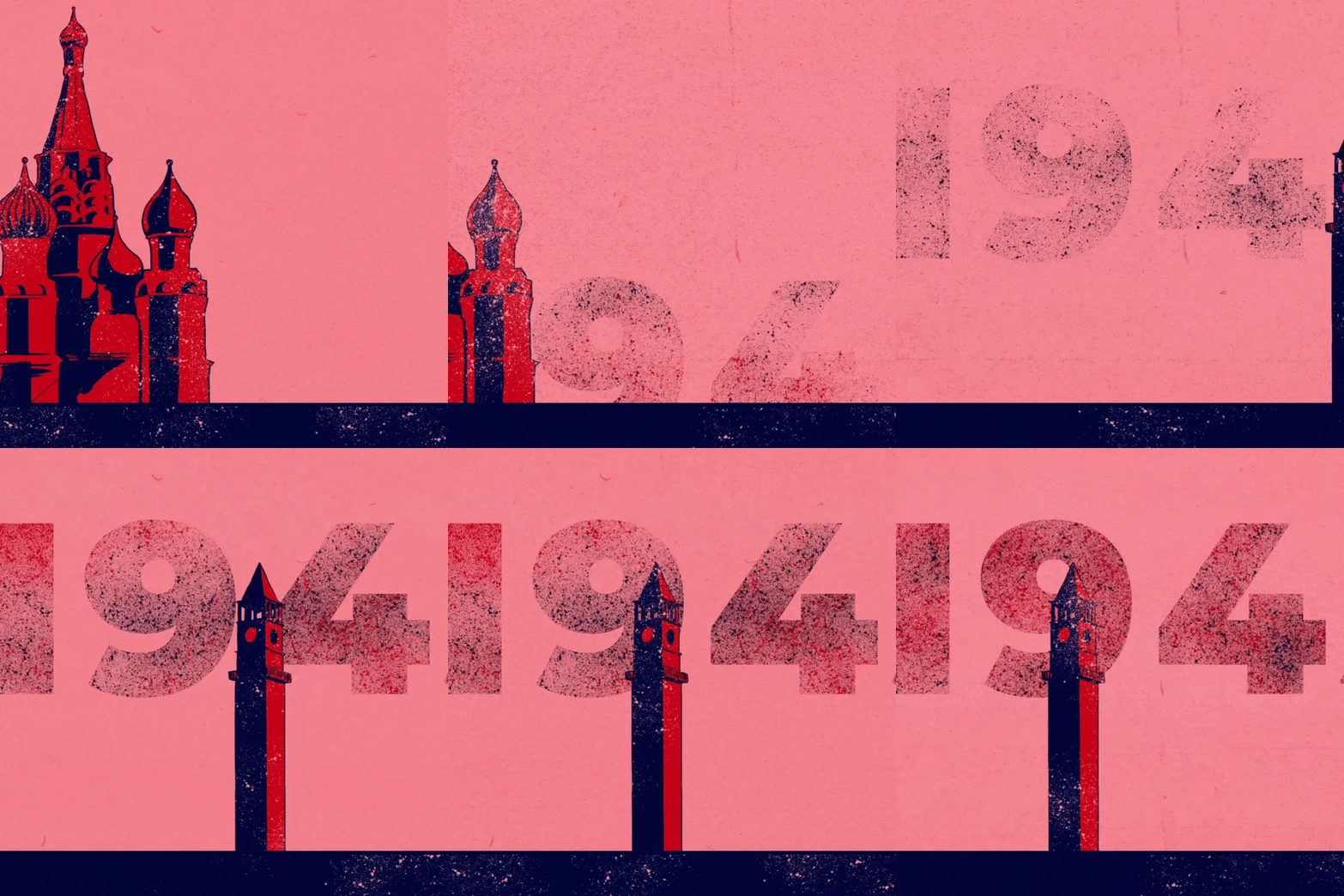



Promotional Purpose
Created to introduce and highlight the book E Majta by Friedrich-Ebert-Stiftung.
Engagement
Designed for digital platforms, making complex themes approachable and visually memorable.
Visual Storytelling
Transforms written history into dynamic motion, connecting past with present.
Cultural Resonance
Pays tribute to the legacy of Albanian thinkers and activists.
These animations are not just promotional material, they are mini visual essays, breathing life into the stories at the heart of E Majta.
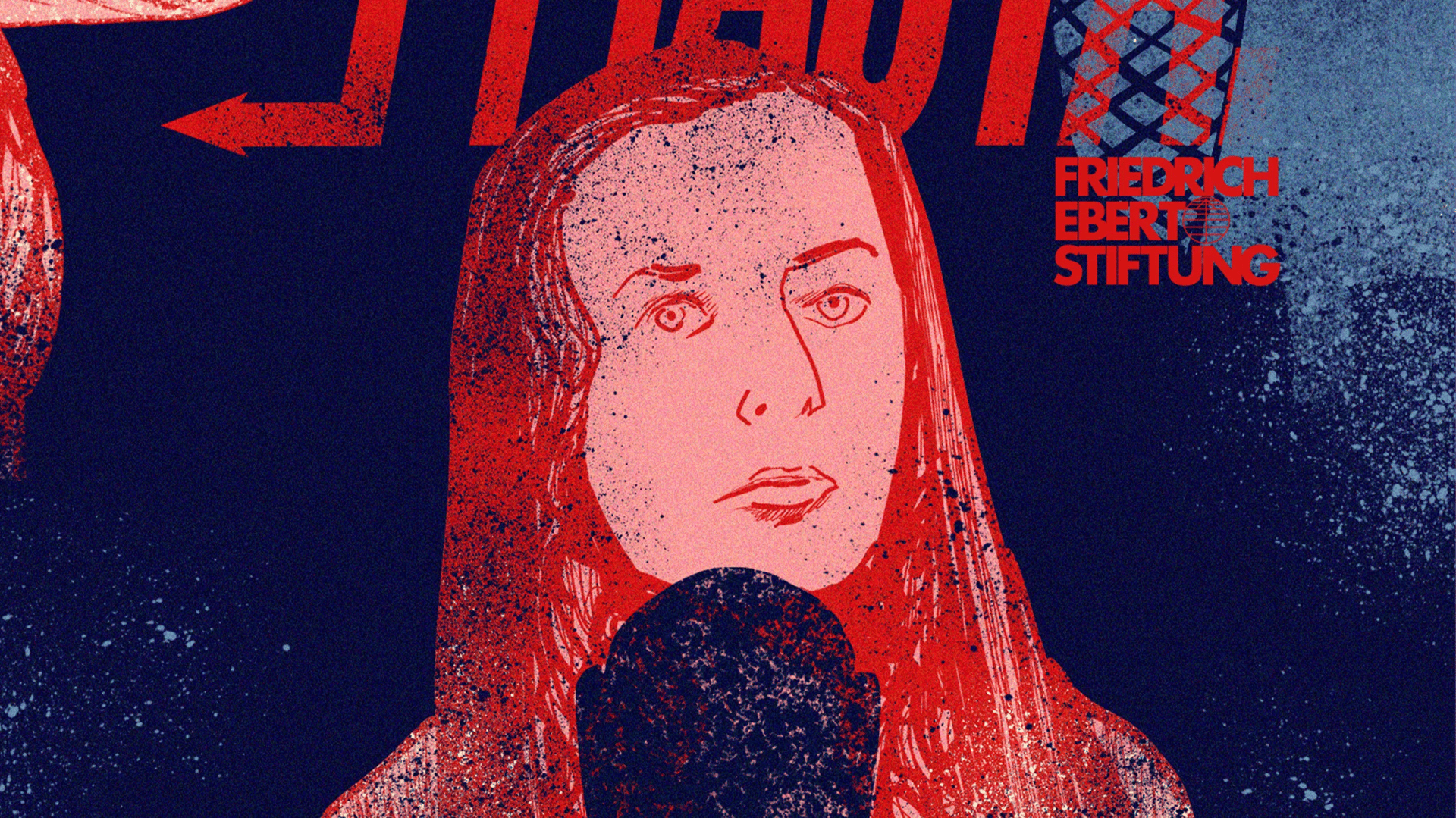
Musine
Kokalari
Born in 1917 in Adana to an Albanian family from Gjirokastra,
Musine emerged as Albania's pioneering female writer—publishing poetry and prose in the 1930s–40s—while studying literature in Rome.
She co-founded the Social Democratic Party in 1943, fiercely opposing both fascist occupation and the rising communist regime.
Arrested in 1946, condemned as an "enemy of the people," she endured imprisonment, the execution of her brothers, internal exile, constant surveillance, and literary silencing until her death in 1983 yet she never recanted her ideals.
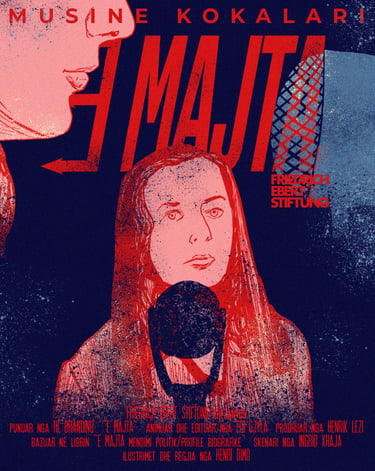
Henri Dimo's animated tribute to Musine Kokalari in the E Majta series delivers her defiant story with razor-sharp visual economy and emotional punch.


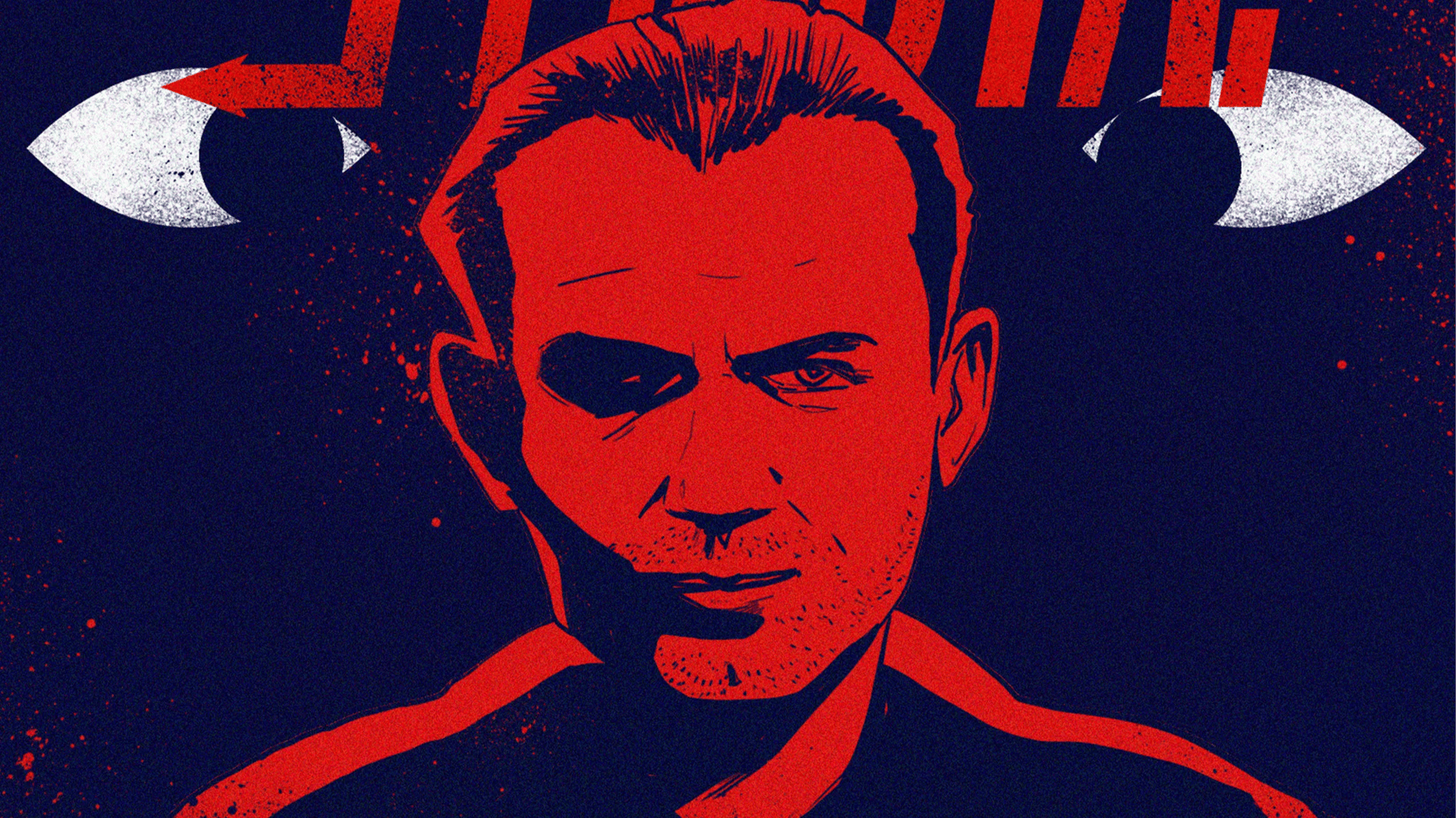

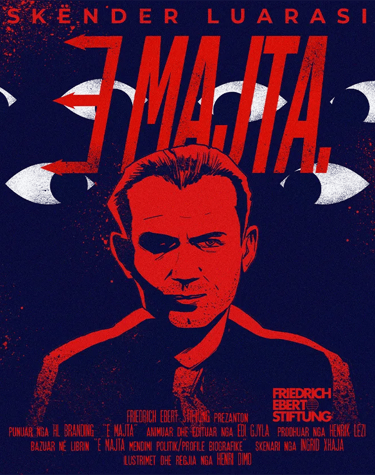
Skënder
Luarasi
Skënder Luarasi (1900–1982)was an Albanian writer, translator, critic, professor, and staunch anti-fascist.
Born in Luaras to patriot Petro Nini Luarasi, he published early, studied abroad (US, Austria), and fought in the International Brigades during the Spanish Civil War (1936–1939).
He joined Albania’s WWII resistance against fascism.
Postwar, he taught Western literature at the University of Tirana, wrote biographies (Migjeni, Ismail Qemali, Isa Boletini), and produced literary criticism.
A lifelong leftist with humanist principles, he grew critical of the Enver Hoxha regime, facing censorship, marginalization, and publication barriers—yet never fully compromised his ideals.
He died in Tirana in 1982, remembered as a principled intellectual and fighterfor progressive causes in Henri Dimo’s E Majta series.
Directing and animation elevate it through smooth digital fluidity, kinetic typography, subtle reveals (fading maps, emerging texts, symbolic overlays), and seamless scene shifts that transform biographical facts into a compelling, contemporary tribute to Albania's leftist thinker and fighter.
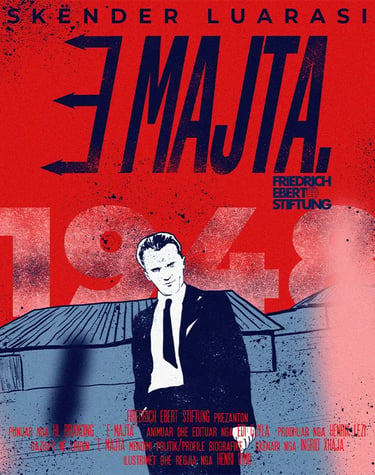


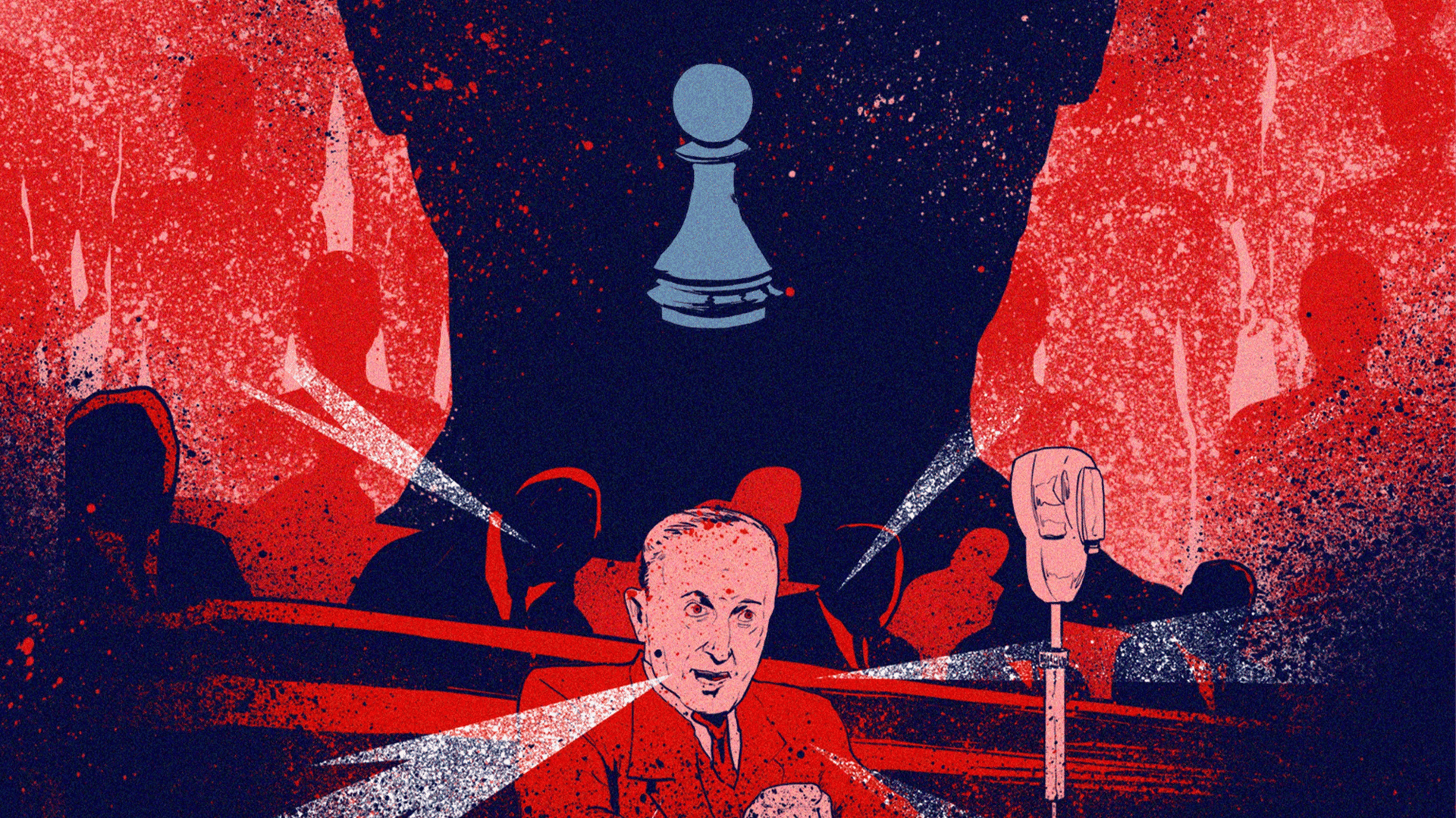

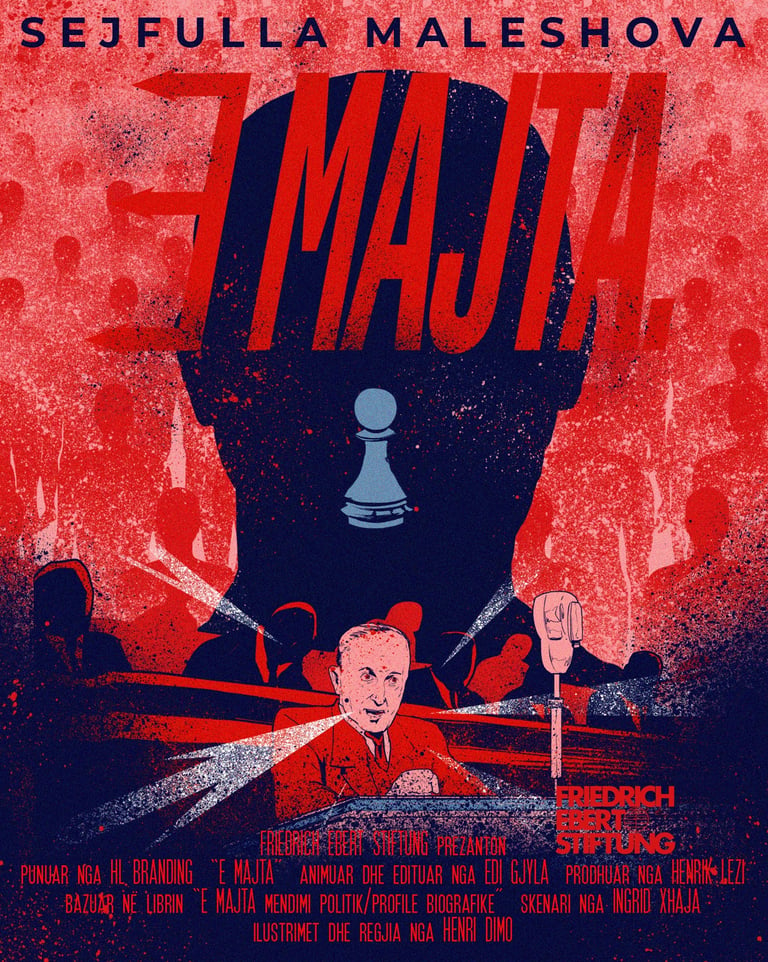
Sejfulla
Malëshova
Sejfulla Malëshova (1900–1971), known by his pen name Lame Kodra, was a key Albanian communist intellectual, poet, writer, and early high-ranking communist figure.
He embraced communism young, rose rapidly in the party during and after WWII—serving as a Central Committee member, Minister of Culture (1944–1946), and influential ideologue promoting socialist realism in literature.
His fortunes reversed sharply in 1946 amid internal purges: accused of "deviationism," nationalism, and moderate/leftist tendencies (favoring broader alliances over hardline Stalinism), he was expelled from the party, removed from power, and marginalized. He spent his later years in isolation and poverty in Fier, dying alone in 1971.

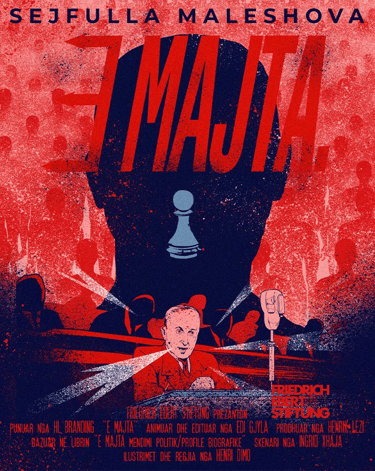
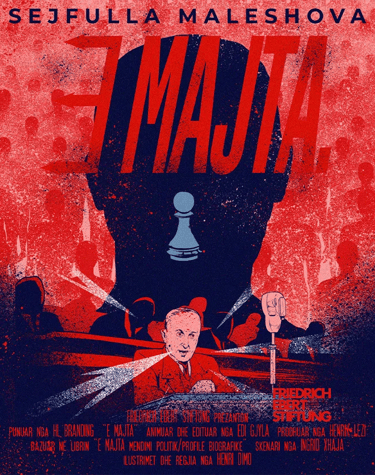
Directing and animation elevate it through smooth digital fluidity, kinetic typography, subtle reveals (fading maps, emerging texts, symbolic overlays), and seamless scene shifts that transform biographical facts into a compelling, contemporary tribute to Albania's leftist thinker and fighter.



Isuf
Luzaj

Isuf Luzaj (1913–2000) was an Albanian philosopher, writer, social democrat, and anti-fascist intellectual.
Born in Kanina near Vlorë, he studied in Shkodër and became active in leftist circles. During WWII, he opposed both fascist occupation and the emerging hardline communist movement—famously warning in a May 1944 memorandum that if the Germans left, communism would dominate southern Albania with force and terror.
After the communist takeover in 1944, he fled to Italy, where he lived in exile, working as a laborer and continuing intellectual pursuits. He never returned permanently to Albania under the Hoxha regime, avoiding the purges, imprisonments, and repression faced by many leftist critics.
He died in 2000, remembered in Henri Dimo’s E Majta series as a principled social democrat and early voice warning against Stalinist authoritarianism in Albania's leftist landscape.
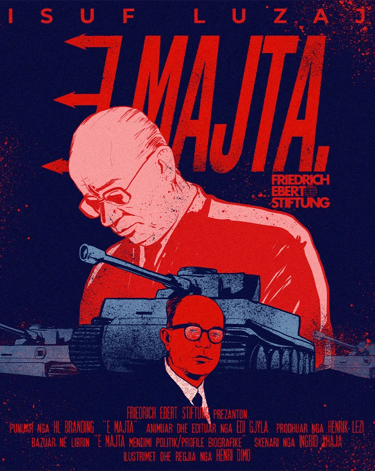
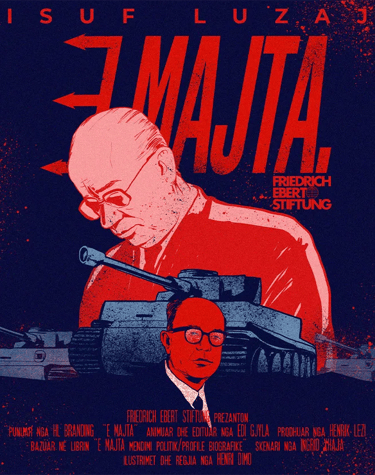
Directing and animation elevate it through smooth digital fluidity, kinetic typography, subtle reveals (fading maps, emerging texts, symbolic overlays), and seamless scene shifts that transform biographical facts into a compelling, contemporary tribute to Albania's leftist thinker and fighter.


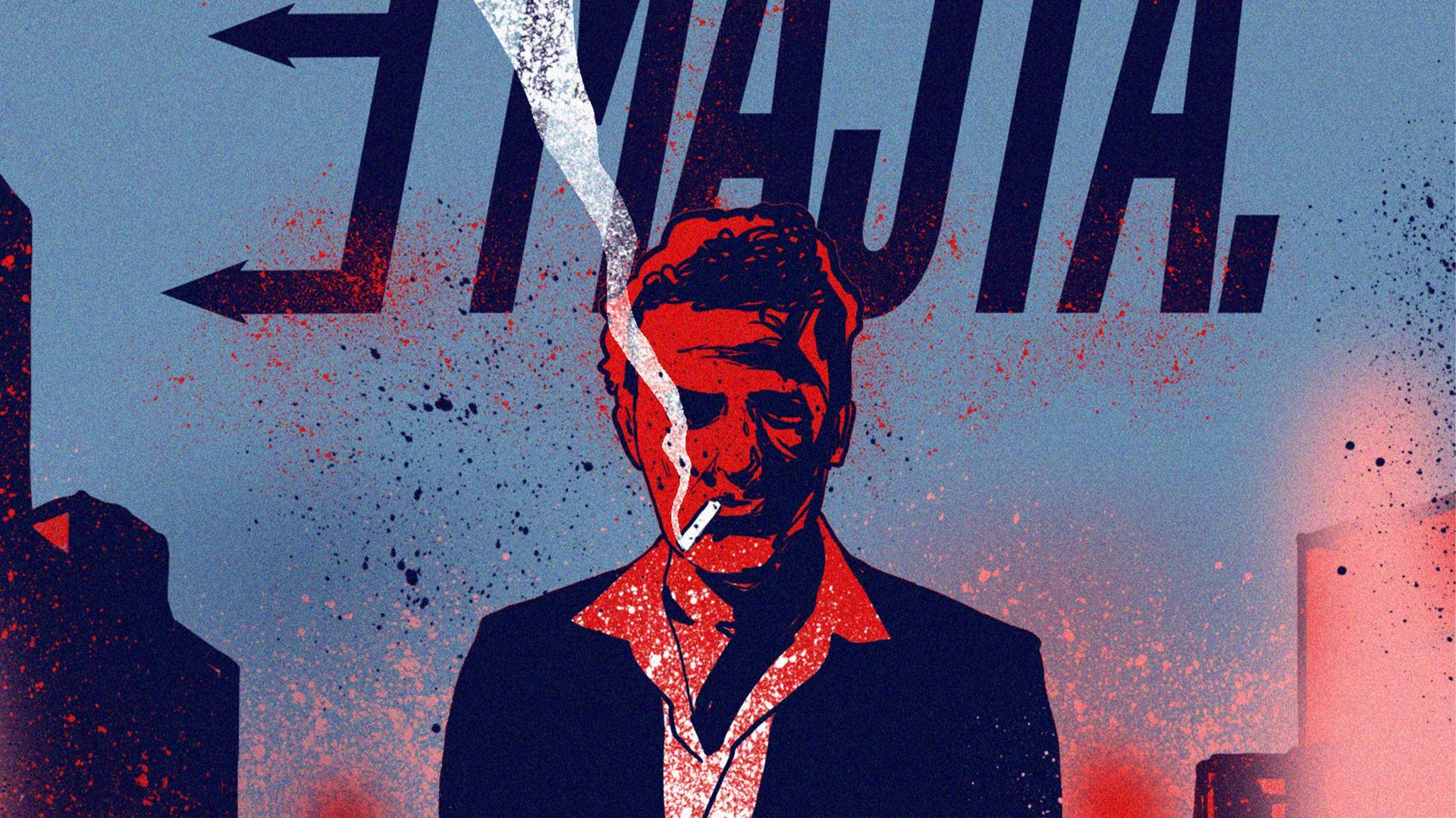

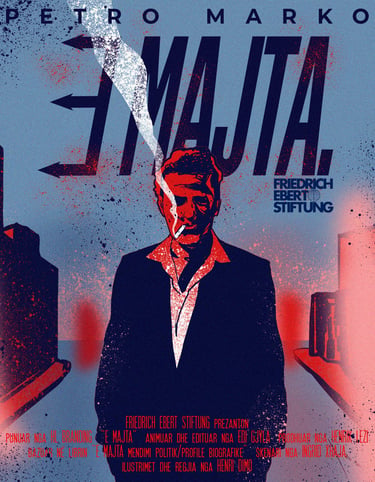
Petro
Marko
Petro Marko (1913–1991) was an Albanian writer, journalist, and committed communist who fought in the Spanish Civil War.
Born in Dhërmi, he volunteered for the International Brigades (1936–1939), inspiring his novel Hasta la Vista. He joined Albania’s WWII anti-fascist resistance and initially supported the communist regime.
Postwar, his independent thinking led to clashes with Enver Hoxha’s orthodoxy: imprisonment, exile, censorship, and marginalization—especially over his criticism of Albanian-Yugoslav ties and deviation from socialist realism. He remained a prolific modernist author and held onto his leftist ideals.
He died in Tirana in 1991, celebrated in Henri Dimo’s E Majta as a principled voice in Albanian literature.
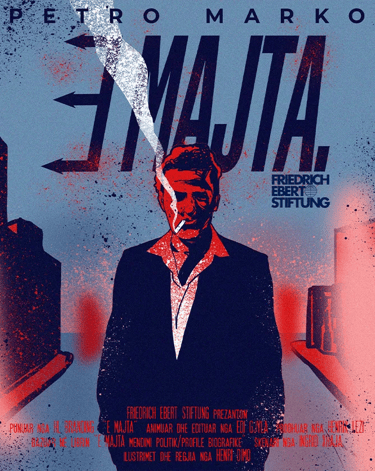
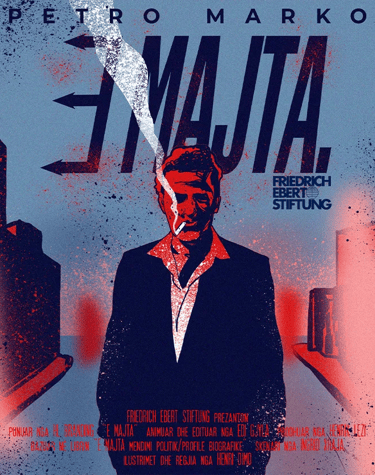
Directing and animation elevate it through smooth digital fluidity, kinetic typography, subtle reveals (fading maps, emerging texts, symbolic overlays), and seamless scene shifts that transform biographical facts into a compelling, contemporary tribute to Albania's leftist thinker and fighter.


design with guts
art with soul
© 2026. All rights reserved.
