
Negativi
A point-and-click horror game about developing the truth, one negative at a time.
Tirana, November 1998. Every truth she brings to light makes the world forget her a little more.
Nora spends her nights in her father’s photo archive, developing torn negatives in his darkroom. Some of them do more than change the paper: they change what the city remembers.
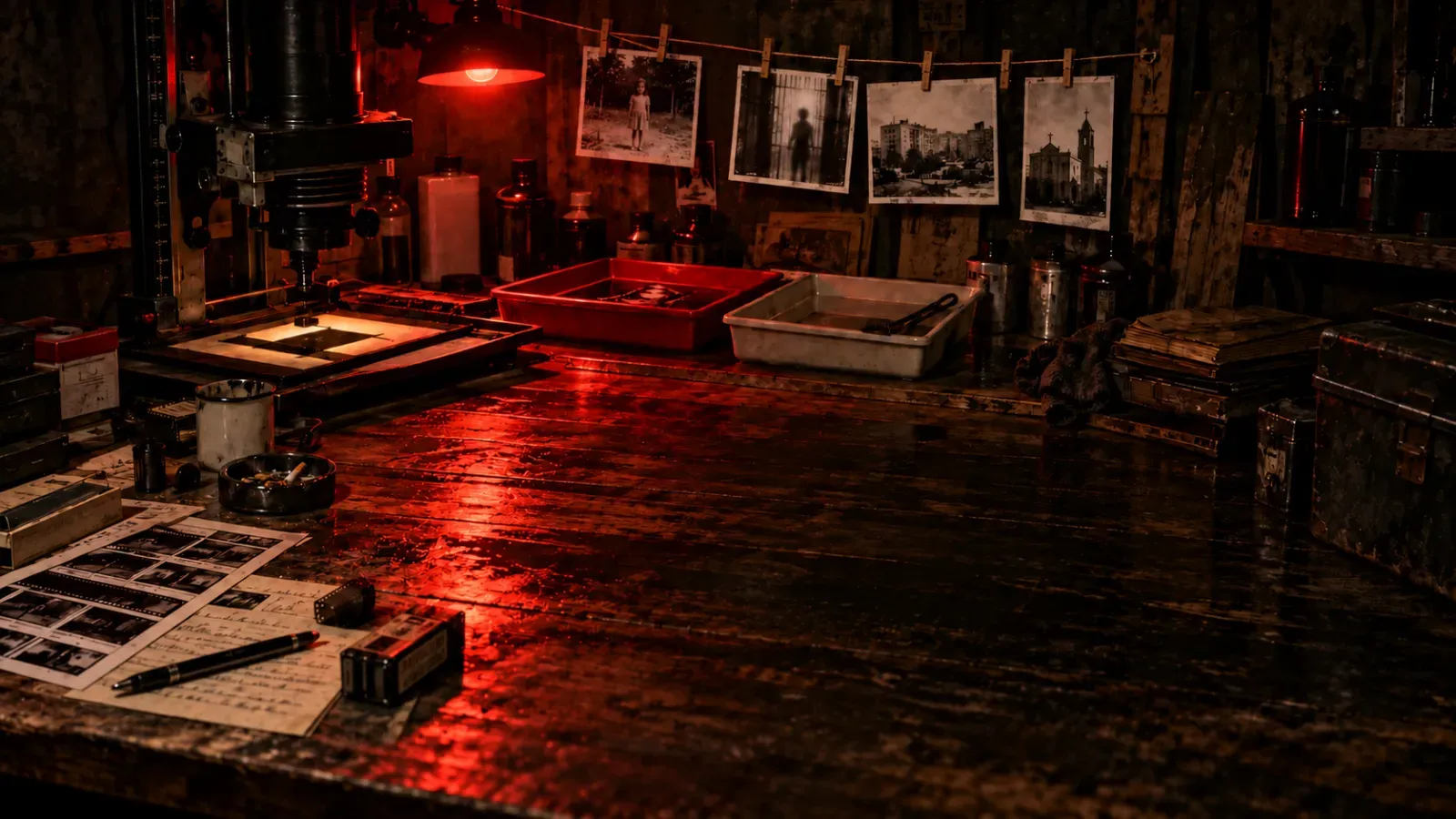
in motion — 01
01 — concept
How much of the truth are you willing to learn, if every piece of it erases a little of who you are?
NEGATIVI is a narrative investigation game built around that one question. There is no combat and there are no ghosts. The horror comes from what people did, and from a slow, quiet disappearance: neighbours who stop recognising you, a reflection that lags behind, a name fading out of the record.
Its structure is inspired by World of Horror: short case files, scarce resources, and a dread meter that only goes up.

in motion — 02
02 — core mechanics
One night per case.
Each case runs from 21:00 to 05:00, and every action costs time. The player sees the cost of each action on the night bar before committing. At dawn, any negative left undeveloped burns.
The darkroom.
Each negative is torn into three pieces hidden around the city. Nora develops them one by one in a real-time darkroom, and each image changes what the witnesses are willing to say.
Fading (Zbehja).
A 0–100 meter for how much the world still remembers Nora. Developing the truth raises it. At its thresholds, people forget her for good, mirrors stop reflecting her, and paths through the story close.
The case board.
Evidence is pinned and connected with red thread as contradictions or matches. The board gives observations and questions, never conclusions. The player writes the conclusion in the night’s theory, and the game never says whether it is right.
“Who are you?”
When a character asks, Nora can answer with her name or stay silent. Saying it to someone who doesn’t know her costs her a piece of herself.
Choices that stay.
Opening the door or not, fixing the print or letting it fade: decisions carry across cases and change who remembers Nora, and how.

in motion — 03
characters — 01 / 02
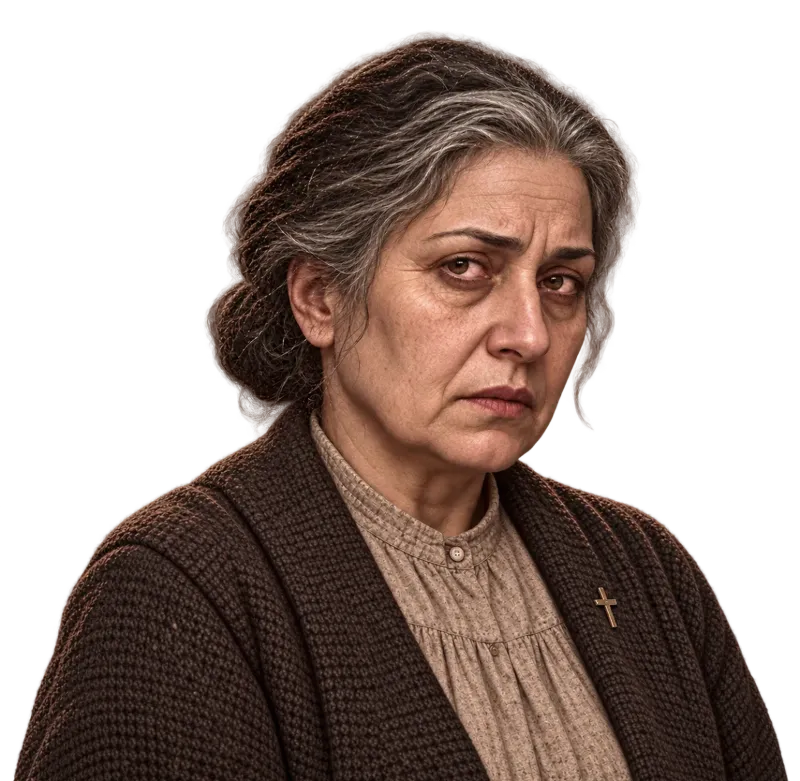


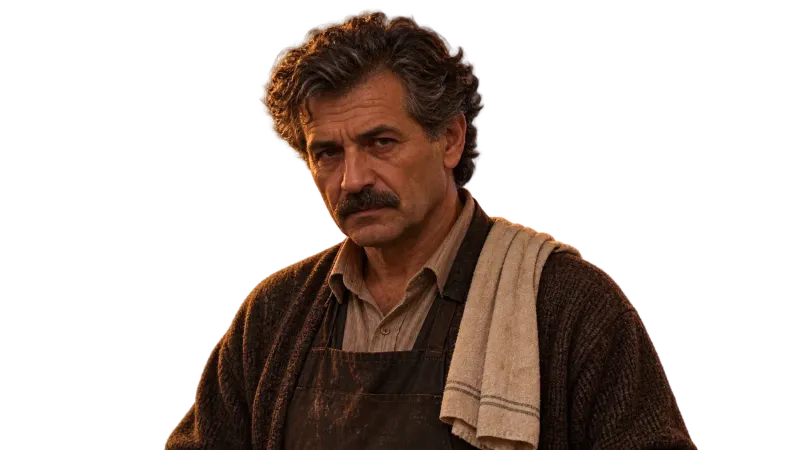
characters — 02 / 02


objects — the diegetic world

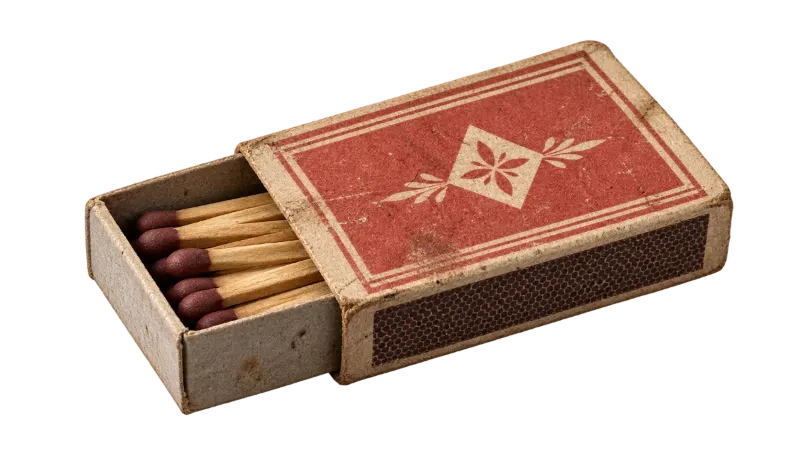





03 — art direction
Analogue photography as the visual language.
Every scene is a still frame composed like a 1990s film photograph, with grain, soft halation, and a slightly unstable exposure. The game should feel like it is being developed in front of you.
Palette.
Deep blacks, safelight red, aged paper, and small pools of warm tungsten light. Colour is rationed: red belongs to the darkroom and to danger.
Two visual worlds.
The story world is diegetic and tactile: torn cardboard, case folders, carbon paper, red string, handwritten labels. The interface that talks to the player (tutorials, prompts, notifications) is a separate cool cyan layer in a clean sans-serif, so it never blends into the fiction.
Fading made visible.
Fading is shown in the art, not only as a number. Nora’s portrait washes out to white and then to a silhouette, mirrors lag and empty, and her name fades from the records. Each time the meter rises, her figure flashes white like a hit.
Restrained motion.
Mostly still images brought to life by small atmospheric loops: a flickering corridor bulb through the peephole, rain on glass, chemicals spreading across paper, a silhouette at a window. Scene transitions are dissolves, never zooms.
Framing.
Each scene sits in a 16:9 photographic frame, and the extended edges are blurred atmosphere, so the game holds its composition on any screen, from ultrawide monitors to phones.
Place and period.
Late-90s Tirana: concrete apartment blocks, stairwells, a neighbourhood bar with a CRT television playing the year’s news, and the archive of a former state photographer. The setting is specific, and the sense of time is personal rather than nostalgic.
Sound.
Muffled knocks, room tone, the darkroom timer, distant thunder on a phone line. Sound carries as much of the dread as the images do.

in motion — 04
04 — role & status
role
Concept, game design, writing and art direction. Images and motion produced with AI image and video tools (Higgsfield, Freepik) under my direction. Engine and code developed in collaboration with Claude (Anthropic).
status
In development. Chapter 1, Case 0014: “The Child in the Courtyard”, is fully playable in the browser on desktop, tablet and phone. Target platforms: Steam and mobile. Language: Albanian, with English planned.
Still here. Let's talk.
design with guts — art with soul